
It’s called “The Blood of Dawnwalker”, not “Blood of the Dawnwalker”. It’s called “The Blood of Dawnwalker”, not “Blood of the Dawnwalker”. It’s called “The Blood of Dawnwalker”, not “Blood of the Dawnwalker”. It’s called “The Blood of Dawnwalker”, not “Blood of the Dawnwalker”.
Blood & Crown
It is the 14th century. In a fictional small valley in the Carpathian Mountains, vampires have overthrown the ruling monarch. The people living there—who until recently were plagued by wars and the plague—must now regularly pay a literal blood tribute to the vampires and submit to them. In exchange for their sovereignty and their own blood, they receive vampire blood, which, among other things, protects them from diseases such as the plague. However, not all residents seem entirely satisfied with this arrangement. While a part of the population has come to terms with this situation, resistance is growing.
The story revolves around Coen, a man who was unwillingly turned into a vampire. After a failed uprising, his family is kidnapped, and he now has thirty days to save them from execution. He receives support from various quarters, including a witch from his home village, other vampires, and the aforementioned resistance fighters. The narrative style is similar to that of The Witcher or other modern RPGs. Dawnwalker attempts to tell a story in which the true intentions of the characters are often just as unclear as the consequences of the protagonist’s actions. At its core, it plays like pretty much any open-world RPG.
World & Time
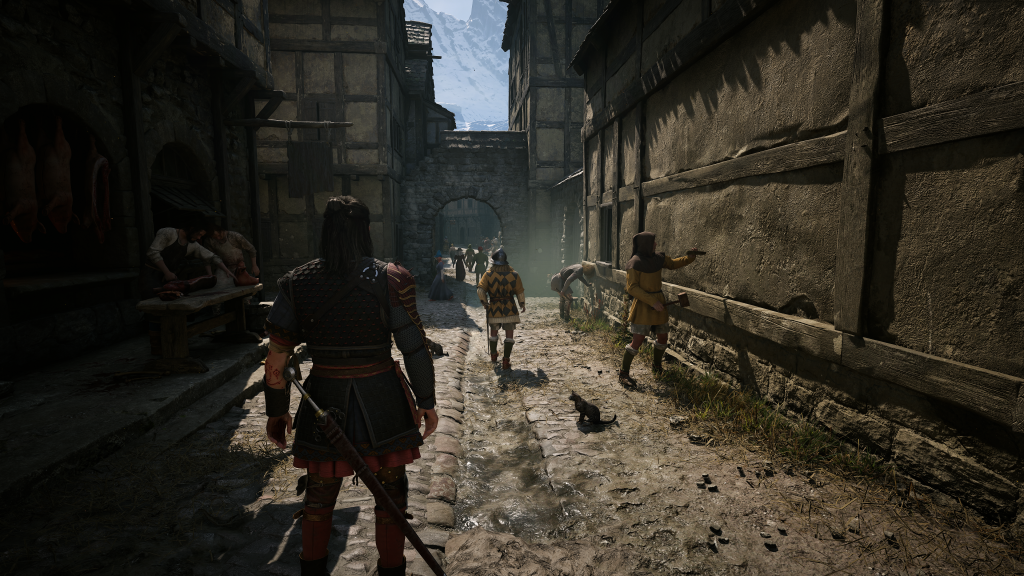
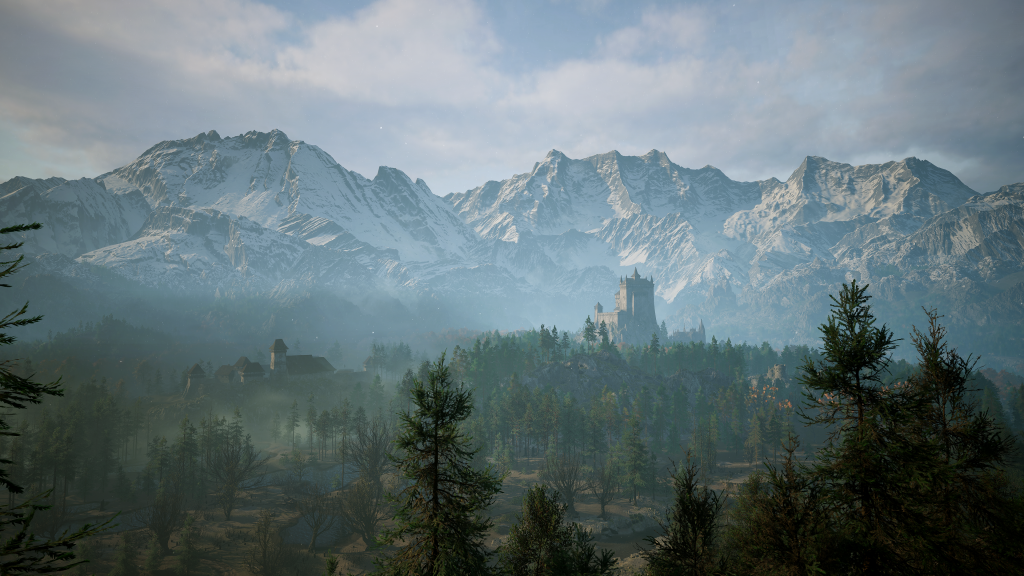
Maybe it’s because of the sheer number of open-world RPGs out there, but my tolerance for the size of game worlds seems to be decreasing year by year. Instead of generating anticipation, the constant stream of announcements about new records (“GTA 6 is twice as big as GTA 5”) tends to trigger a slightly oppressive sense of dread in me. At 10 km², the game world of The Blood of Dawnwalker is certainly manageable, but it’s supposed to be packed with content. That’s basically true. It feels like there are bandit camps, monster lairs, or other activities around every corner to really get under the skin of the blood-drinking ruling class. But that’s the extent of its complexity. At some point while playing, I noticed that the number of quests that really tell a somewhat longer story is fairly limited. Instead, these focus more on the supporting characters and are less relevant to the game world as a whole.
When looking at the prologue, I think we could have used more of that.
Then there’s the time-management system, which the game uses to convey a sense of urgency. This is probably the aspect that stands out the most. Various activities, from quests to leveling up certain skills, take time. Even in the prologue, it’s made clear to the player: You can’t do everything. How much time an activity takes, whether you suddenly need more time for some things than originally planned—these are all lessons you learn right there.
Here’s an example: A woman from Coen’s village was supposed to make a banner for the Vampire Lord. It was stolen, and now she fears for her life. So I set out to find the banner—and I found the culprit. The next step would be to decide how to handle the situation. But right at that moment, the quest cuts off and suddenly requires more time. Unfortunately, I’ve reached the time limit here, so the quest is marked as a failure. As a result, the woman is killed and hanged in place of the banner.
This obviously wasn’t a flaw or an error. The lack of transparency and unpredictability are part of the quest design. And despite my initial personal aversion, I have to admit: this concept has always existed—especially the uncertainty regarding the outcome of quests. If you look at it that way, Dawnwalker simply takes this concept to its logical conclusion. I assume that the players’ general aversion stems primarily from how unfamiliar they are with this design. You’re given an open world with thirty days to explore. Is that too little? Is that a lot? What takes time and what doesn’t? What takes a disproportionate amount of time? Figuring that out is fun, but if, after 20 hours, you suddenly realize you’ve miscalculated and no longer have enough time for something important, it can lead to a lot of frustration.
In the prologue, the time limit bothered me much less because the scope is significantly smaller. A compact number of quests spread across a small area, with a tight time frame. In hindsight, I probably would have enjoyed the game much more if it had used several small instances instead of a large open world—almost like a roguelike.
What stays?
It sounds cliché, but to me, “The Blood of Dawnwalker” is practically the definition of a rock-solid debut that does a lot of things well but doesn’t really stand out in any one area. A few of the ideas, like the time system, definitely need some refinement, but the Rebel Wolves from Poland can certainly be satisfied with the game as a whole. That said, it’s also worth noting that Dawnwalker’s gameplay generally follows very familiar paths and doesn’t really reinvent the wheel. This is especially disappointing because simply too many other good titles were released in the summer and fall of 2026. On top of that, there’s its big brother, The Witcher 3, which towers over this title in virtually every aspect and only recently received its remastered update. In conclusion, though, anyone who’s had their fill of The Witcher 3 but wants a fresh story in a similar package will find plenty to enjoy here.
By the way: Toward the end, Dawnwalker sets the stage for sequels and establishes characters for future stories. Let’s see what else is in store.